Wall Microwave Combo vs Countertop Microwave: What Is the Difference?
A built-in microwave combo occupies an approved cabinet opening, while a countertop microwave sits on an open work surface. However, placement alone does not determine cooking performance. A countertop model can offer microwave-only operation or additional oven functions, and a built-in model can likewise have different capabilities. Compare installation requirements and cooking modes as two separate decisions.
A built-in oven and microwave can mean two different arrangements
The phrase “built in microwave oven combo” can describe a single cavity that combines microwave cooking with another heating method. It can also refer to a larger wall oven combination containing a separate microwave above a conventional oven. These arrangements differ substantially in capacity, cabinet requirements, electrical needs, and the ability to cook multiple dishes simultaneously.
A single-cavity hybrid processes one cooking load at a time, even when it combines heating methods. A two-cavity wall oven with microwave provides separate spaces for different dishes. Before browsing a Combo Microwave Oven, decide whether you want a compact multipurpose appliance or a replacement for a full-size oven installation.
Countertop placement does not necessarily mean fewer functions
A basic countertop microwave is well suited to reheating, defrosting, and other microwave cooking tasks. A combination microwave convection oven adds fan-circulated hot-air cooking when that function is explicitly included. Some hybrid products use other oven-heating arrangements, so “microwave plus oven” should not automatically be interpreted as convection. Read the operating modes rather than relying on the category name.
Compare Everyday Cooking, Space, and Ownership Costs
The best comparison starts with an ordinary week of meals. Someone reheating lunch and warming beverages has different requirements from a household baking small dishes or preparing several dinner components together. Consider your largest regular dish, how many people eat at once, and whether another oven is already available.
- Counter space: A built-in installation can release preparation space, but it uses cabinetry and requires the specified ventilation arrangement.
- Installation: A countertop appliance usually involves fewer changes; a built-in model may require cabinet preparation, approved trim, and electrical work.
- Cooking flexibility: Available heating modes determine versatility, regardless of where the appliance sits.
- Replacement: Countertop units are generally easier to exchange; built-in replacements must match the installation requirements of the available opening.
- Accessibility: Counter height may suit some users, while a carefully positioned built-in appliance can improve access for others.
Reheating convenience versus baking and browning
Microwave-only cooking does not produce the same dry-heat browning as an oven. If crisp surfaces and baked dishes matter, look for the appropriate oven, grill, or convection function and review its operating instructions. A microwave and convection oven combo may handle more tasks than a basic microwave, but usable cavity dimensions still determine which dishes fit.
Be equally careful with searches for a “microwave toaster oven” or “microwave and toaster oven.” Those terms do not guarantee bread-toasting capability, an included rack, or particular browning results. Check whether the manufacturer specifically describes the task you want to perform. A broad product name is no substitute for a supported cooking mode.
Purchase price is only part of the budget
For a built-in installation, request a total covering the appliance, required accessories, cabinet changes, installation labor, and any electrical modifications. For a countertop model, consider whether its footprint would force you to buy a suitable stand or reorganize the kitchen. Include delivery access and old-appliance removal when comparing quotations. Neither placement style automatically guarantees lower operating costs, because energy use depends on the appliance, selected mode, and cooking time.
Choosing a Combo Microwave Oven in New York City Apartments
For a Combo Microwave Oven in New York City neighborhoods like the Upper West Side, Chelsea, Astoria, Park Slope, and Williamsburg, start with the actual kitchen layout. If your apartment has a narrow preparation counter, moving an approved appliance into cabinetry may make daily cooking easier. If that cabinet currently holds most of your dishes, however, the trade-off may be less attractive. Measure both the space gained and the storage lost.
Rental kitchens, cabinet permission, and delivery access
In a rental near Central Park or a Brooklyn apartment near Prospect Park, a countertop model can be a practical choice when permanent alterations are unsuitable. Check your lease and obtain the necessary permission before modifying cabinetry or arranging electrical changes. If you own a condominium or co-op, ask building management about alteration procedures and contractor access. Requirements depend on the property, so confirm them before booking installation.
Three practical issues deserve attention: limited preparation space, access to a suitable outlet, and the route from the building entrance to the kitchen. Measure doorways and account for stairs, elevator reservations, and delivery restrictions where applicable. An appliance that fits its final position still needs to reach that position. Confirm whether the quoted delivery service includes carrying it inside.
Choose a height that works with hot dishes
A high installation may look tidy but make it difficult to see inside a bowl or lift a hot casserole safely. Consider everyone who regularly uses the kitchen, including shorter adults and people with limited reach. Check the door’s movement and identify a nearby surface where a hot dish can be placed. Installation height should support comfortable handling rather than follow appearance alone.
Chicago, Los Angeles, and Houston: Match the Appliance to the Home
City names provide useful context, but they do not determine which appliance belongs in a kitchen. A small Chicago condo and a compact Los Angeles accessory dwelling unit may share more installation constraints than two homes on the same street. Use the following situations as planning examples, then verify your own dimensions, permissions, and cooking habits.
Chicago condos: plan around the existing opening
If you are replacing a wall oven and microwave in a Lakeview or Lincoln Park condo, record the existing model numbers before shopping. The visible front width does not reveal the complete cabinet opening or electrical arrangement. Ask the installer to compare the replacement’s installation drawing with the actual space. Include any building requirements for contractor scheduling and appliance removal in the project timeline.
Los Angeles kitchens: balance compactness with meal capacity
For a small kitchen in Silver Lake or an ADU in Los Angeles, a compact hybrid can be worth considering when meals are usually prepared in modest portions. Test the idea against the cookware you actually use, including handles and lids. If you regularly cook a main dish and side dish at different temperatures, one cavity may become a bottleneck. A compact footprint is helpful only when its cooking capacity matches the household.
Houston homes: separate indoor placement from outdoor use
In a Houston kitchen in the Heights or Montrose, compare the convenience of a countertop appliance with the preparation space an approved built-in installation could release. If you are also planning patio cooking, assess that as a separate purchase decision. A standard indoor microwave should not be treated as an outdoor appliance. Even products marketed for outdoor use need to be operated and stored according to their manuals.
How the Two Equator Appliances Fit Different Cooking Needs
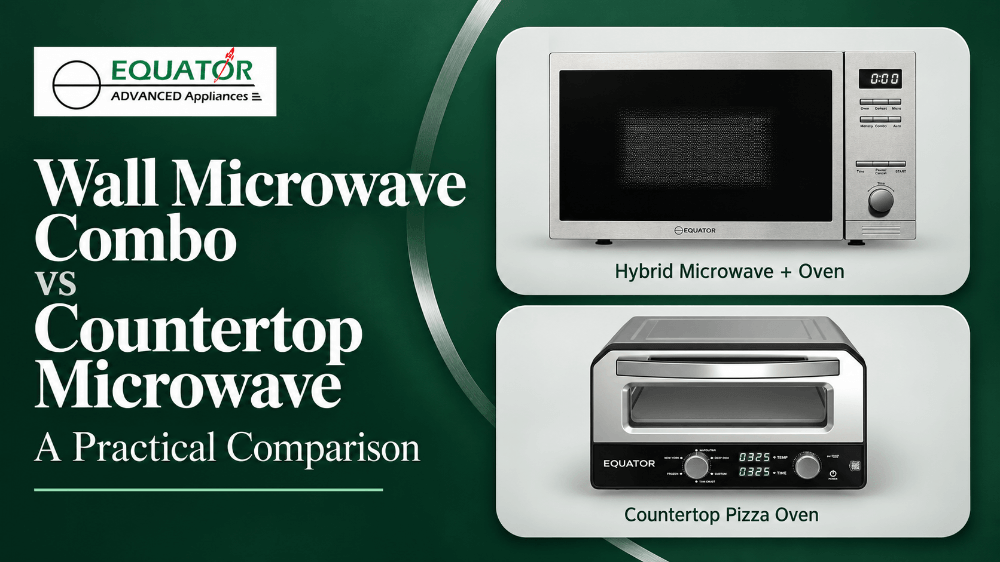
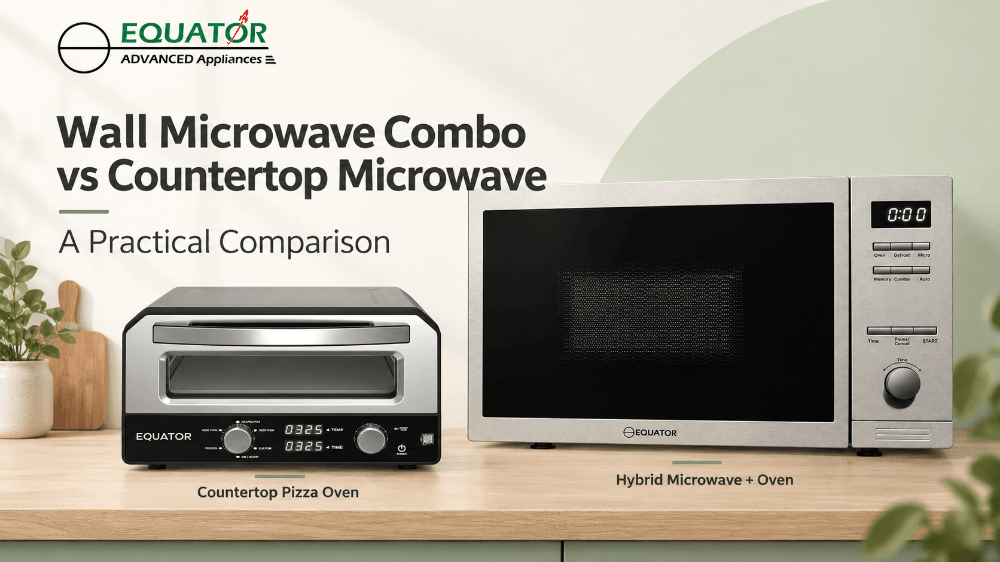
The two supplied Equator products address different jobs. One combines microwave and oven functions in a compact appliance with freestanding and built-in options. The other is a dedicated countertop pizza oven. Comparing them by purpose prevents confusion between everyday microwave convenience and specialized baking.
Equator Hybrid Microwave+Oven 0.8 cu.ft. Free Standing/Built-in Stainless w/Trim
Equator lists the CMO 800 T with a 0.8-cubic-foot capacity, 800-watt microwave output, and an included trim kit. Its specified freestanding dimensions are 11.1 inches high, 18.5 inches wide, and 14.7 inches deep. The built-in microwave and oven combo offers a compact option for households considering either placement style.
The product page contains differing figures for oven output and some dimensions with trim. Obtain the current installation drawing and written specification confirmation before ordering cabinetry or relying on those figures. The stated exterior dimensions are not cabinet cutout instructions. Also confirm the exact oven-heating method if convection cooking is essential to your purchase.
Equator 0.5 cu.ft. Indoor/Outdoor Pizza Oven with Authentic Stone Bake
The EPO 500 is presented as an indoor/outdoor pizza oven for 12-inch pizzas, with a stone, six settings including Custom, and an accessory set. Equator lists countertop installation and a temperature range of 175°F to 750°F. This countertop pizza oven with baking stone serves a different purpose from a microwave and should not be purchased as a microwave replacement.
Consider it when pizza baking is a regular activity and you can dedicate an appropriate operating surface to it. Confirm the required clearances, outdoor-use conditions, and cleaning instructions in the current manual. The page’s product title uses approximately 0.5 cubic feet, while the specification lists 0.48 cubic feet; the older URL wording should not be used to determine capacity.
Measure Before Buying a Built-In Microwave Oven Combo
A successful installation depends on more than finding an appliance narrower than the cabinet. The opening must meet the model’s support, ventilation, clearance, and electrical requirements. Ask the installer to work from current manufacturer documentation. Avoid making irreversible cabinet changes from a retailer photograph or an overall-width measurement.
- Identify the appliance type: Distinguish a single-cavity hybrid from a two-cavity wall oven combination.
- Measure the available space: Record opening height, width, depth, and nearby obstacles.
- Check the complete installation: Account for trim, airflow, support, cord routing, and service access.
- Verify electrical compatibility: Have a qualified installer or electrician compare the appliance requirements with the existing supply.
- Test cookware and door clearance: Confirm usable interior space and room to load and unload dishes.
Why a 27-inch microwave oven combo needs extra care
“27 inch microwave oven combo” usually describes a nominal product size category, not a universal cabinet cutout. Two models in that category can still require different openings, depths, or electrical connections. A compact appliance with trim is not automatically interchangeable with a 27-inch wall oven combination. Treat any change between those formats as an installation project requiring verification.
Do not enclose a countertop-only microwave
A shelf opening does not make every countertop microwave suitable for built-in use. Use an enclosed installation only when the manufacturer approves it and provides the required instructions or compatible accessories. Decorative trim cannot compensate for an unsuitable ventilation arrangement. If the appliance is approved for both placements, follow the instructions for the configuration you select.
Frequently Asked Questions About a Combo Microwave Oven in New York City and Other U.S. Cities
These questions help narrow the decision before you compare finishes or promotional prices. Focus on the intended cooking tasks, the approved installation, and the usable space. Confirm model-specific details before placing an order.
Is a built-in microwave and oven combo better than a countertop microwave?
It is better when integrated placement and suitable additional cooking functions justify the installation work. A countertop microwave is often more practical when easy replacement, portability, and simple reheating are priorities. Compare capability separately from placement, because either format can include different features.
Can a combination microwave and convection oven replace a full-size oven?
It may cover many small-portion cooking tasks when its supported modes and capacity match your recipes. It will not necessarily accommodate large roasting pans, several trays, or simultaneous dishes. Check interior dimensions and cooking instructions before deciding to remove a full-size oven.
What is the best Combo Microwave Oven for a New York City rental?
A freestanding model that fits your counter and cooking needs is a sensible starting point when cabinet alterations are undesirable. Confirm ventilation space, outlet compatibility, and the amount of preparation surface remaining. Built-in placement becomes an option when the appliance is approved for it and the property permissions are in place.
Will a 27-inch microwave and oven combo fit an existing 27-inch opening?
Not necessarily, because nominal appliance width and required cutout dimensions are different measurements. Verify the exact opening requirements, depth, support, and electrical supply for the replacement model. Do not order solely by the width printed in the product title.
Does a microwave and conventional oven combo allow metal cookware?
Cookware rules depend on the selected operating mode and the specific appliance. An accessory permitted during oven-only cooking may not be suitable during microwave or combination operation. Follow the manufacturer’s mode-specific instructions instead of assuming all oven-safe cookware is acceptable.
Is the Equator pizza oven an alternative to a microwave combo?
It is an alternative for a different cooking priority: dedicated pizza baking. It does not provide microwave reheating or defrosting functionality. Choose between them by considering which cooking tasks you need, or evaluate them as complementary appliances if space allows.
Choose the Installation That Makes Everyday Cooking Easier
Choose a built-in Combo Microwave Oven when you have an approved cabinet location, want to recover preparation space, and will use its cooking functions. Choose a countertop microwave when flexibility and straightforward replacement matter most. Before ordering, measure your cookware and installation space, confirm the current product specifications, and request a complete installation estimate where needed. Explore the Equator options above and select the appliance that fits both your kitchen and the meals you actually make.