How Combo Washer Dryer Technology Works
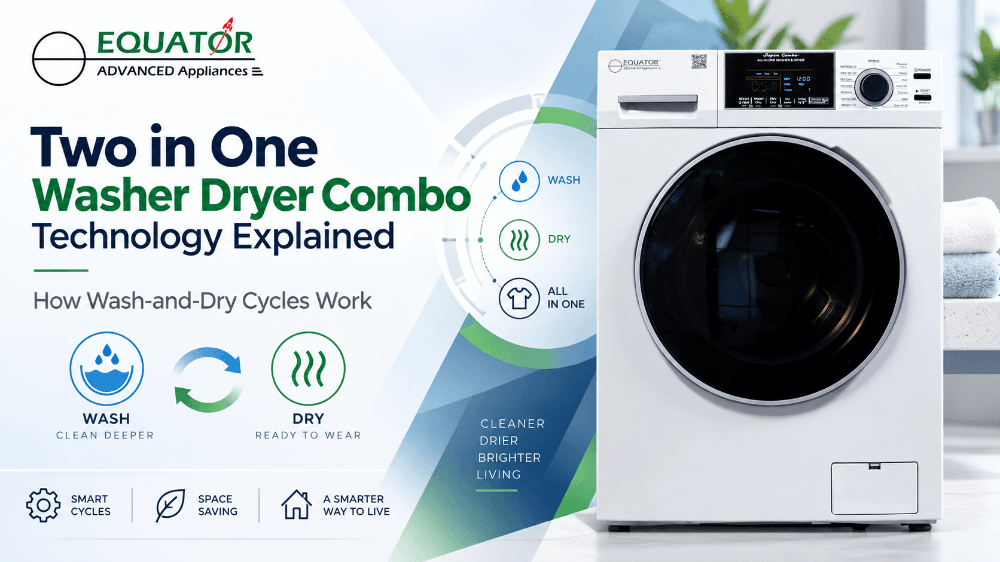
A Combo Washer Dryer uses one horizontal drum for both washing and drying. During the wash portion, water and detergent enter the drum while controlled tumbling lifts and drops clothing through the wash solution. After rinsing, the machine accelerates into a high-speed spin that removes a significant amount of water before drying begins.
The important difference from a traditional washer and dryer set is what happens next. Instead of opening the washer, moving wet clothing into another appliance, selecting another program, and starting again, the combo can automatically transition into its drying stage when a complete wash-and-dry program is selected. This is why shoppers use phrases such as washer dryer combo one unit, one unit washer and dryer combo, washer dryer combo in one unit, and single unit washer dryer combo. They all describe the same basic concept: one drum handling both parts of the laundry process.
Why front-loading design is important
A front-loading drum allows laundry to tumble through water rather than relying on a central agitator. During washing, the rotating drum repeatedly lifts fabrics and lets gravity bring them back down. During drying, the same tumbling action separates garments so heated air can move between them more effectively.
This configuration is particularly useful in a best front load washer dryer combo because the same drum, motor, controls, drainage system, and cabinet can perform two different jobs. A model with a 1400 RPM maximum spin speed can also remove more moisture mechanically before the heated drying stage begins, helping reduce how much water the dryer system must handle afterward.
From Wash to Dry: What Happens During a Two in One Washer Dryer Cycle?
A complete two in one laundry cycle can be divided into several stages. Exact programming varies by selected cycle and model, but understanding this sequence explains why an all-in-one appliance can wash and dry without user intervention.
- Water intake: The machine fills according to the selected program and load requirements.
- Wash action: The drum rotates in controlled patterns that move clothing through water and detergent.
- Drain and rinse: Used wash water is pumped away and replaced with clean rinse water.
- Final extraction: High-speed spinning removes as much remaining water as practical before drying.
- Drying transition: When wash-and-dry operation is selected, the machine changes automatically from water-based cleaning to heated drying.
- Moisture removal: Depending on the model, moist air is either exhausted through a vent or processed through a ventless condensing system.
- Cycle completion: The drum finishes the selected program and the load is ready for removal.
This automatic transition is one of the biggest advantages for users who cannot stay home to move laundry between machines. You can start an appropriate load before handling other household tasks and avoid discovering hours later that washed clothing is still sitting wet in a separate washer.
Why the spin cycle matters to drying time
Drying does not begin with completely saturated clothing. The high-speed extraction stage is a critical bridge between washing and drying. The more water that can be removed through centrifugal force, the less moisture the heated drying system has to remove.
Models such as the Original All-In-One 4600 Washer Dryer VENTLESS/VENTED PET Cycle 1.62cf/15lbs 110V and Original All-in-one 4700 Washer Dryer Ventless FULLY BUILTIN 0-CLEARANCE 1.62cf/15lbs 110V 1400RPM are designed around compact 15-pound-class laundry applications. The 4700's 1400 RPM specification illustrates why spin performance should be considered alongside drying technology when comparing a small washer dryer combo.
Ventless Washer Dryer Combo vs. Vented Drying Technology
The biggest technological decision for many buyers is whether to choose vented or ventless drying. Both approaches use heat and tumbling, but they handle moisture differently.
How a ventless dryer combo removes moisture
A ventless system does not require a conventional dryer exhaust duct running through an exterior wall. Instead, warm air interacts with the wet laundry and picks up moisture. The machine then processes that moisture through its condensing system, allowing water to be removed rather than continuously sending humid dryer air outdoors.
This makes a ventless washer dryer combo especially relevant where creating a dryer exhaust route is difficult or prohibited. The Original All-in-one 4700 Washer Dryer Ventless FULLY BUILTIN 0-CLEARANCE 1.62cf/15lbs 110V 1400RPM is built specifically around ventless drying and a fully built-in, zero-clearance installation concept.
Ventless drying can take longer than an equivalent vented cycle because moisture is being condensed and removed inside the system instead of exhausted directly outdoors. Actual cycle duration varies with fabric type, load size, selected program, starting moisture level, and installation conditions, so shoppers should avoid treating one advertised cycle time as universal.
How vented drying works
A vented dryer heats air, passes it through tumbling laundry, and sends the resulting warm, moisture-laden air through an exhaust duct to the exterior. Where a proper vent route already exists, this approach can provide faster moisture removal.
The Original All-in-One 4800 Washer Dryer VENTED-DRY 30% FASTER than Condense 15lb 110V is intended for users who prioritize vented drying. Its product positioning specifically highlights vented drying as 30% faster than condensing operation, making it worth considering for RVs, compact homes, or other installations where an appropriate exhaust route is available.
Convertible vented and ventless models
A washer and ventless dryer combo does not always have to remain permanently ventless. Some convertible models give owners installation flexibility. The Original All-In-One 4600 Washer Dryer VENTLESS/VENTED PET Cycle 1.62cf/15lbs 110V, for example, is designed to support both vented and ventless operation while also incorporating a Pet Cycle.
The Original All-In-One CONVERTIBLE 5500 Washer-Dryer 18lb/1.9cf SANITIZE ALLERGEN Cycle 1400RPM takes the convertible concept into a larger 1.9-cubic-foot, 18-pound format. For households wanting more capacity while retaining installation flexibility, this compact washer and dryer combo adds Sanitize and Allergen cycle options alongside a 1400 RPM spin specification.
Why a Combo Washer Dryer Fits New York, Chicago, Los Angeles, and Other Major U.S. Cities
Urban laundry challenges are often determined by the building before the appliance. Apartments in Manhattan, Brooklyn, and Queens can have narrow hallways, shallow closets, limited utility connections, and restrictions on exterior modifications. A resident near Central Park, for example, may care more about cabinet depth and ventless installation than someone replacing a full-size laundry pair in a suburban basement.
Chicago presents similar challenges in high-rise condos around the Loop and apartment-heavy neighborhoods such as Lakeview. Building associations may have requirements concerning plumbing modifications, dryer venting, and appliance installation, so residents should confirm building rules before buying any apartment washer dryer combo. In older properties, the ability to use a compact 110V appliance can also simplify planning compared with installing equipment that requires a dedicated traditional electric-dryer connection, although the electrical circuit must still meet the manufacturer's requirements.
In Los Angeles neighborhoods such as Koreatown, space efficiency can be more valuable than maximum laundry-room capacity. San Francisco apartments around the Mission District or Golden Gate Park can face similar floor-space limitations. For these homes, a compact washing machine and dryer combo can replace the footprint of two separate appliances while still providing both functions.
Small apartments and laundry closets
Searches for apartment washer dryer combo, apartment washer and dryer combo, washer and dryer combo for apartments, apt washer dryer combo, and washer dryer combo small apartment usually come from buyers facing the same problem: they need full laundry functionality without dedicating an entire room to it.
Measure more than appliance width. Check cabinet depth, door swing, supply hoses, drainage, electrical access, hallway clearance, and the path from the building entrance to the installation location. A unit that fits the laundry opening on paper is not useful if it cannot clear an elevator door, stair landing, or apartment hallway.
Compact Washer Dryer Combo Options for Different U.S. Living Situations
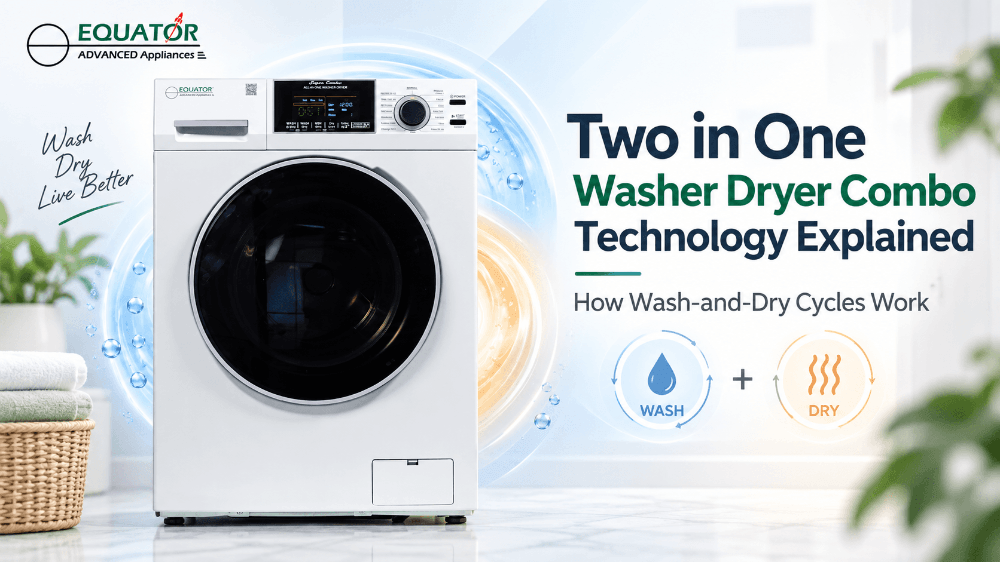
Terms such as compact washer dryer combo, small washer dryer combo, tiny washer dryer combo, small washing machine dryer combo, tiny washer and dryer combo, space saver washer and dryer combo, small dryer washer combo, and small size washer dryer combo sound interchangeable, but the buyer's installation needs may be very different.
For apartments, condos, ADUs, and tiny homes
The Original All-in-one 4700 Washer Dryer Ventless FULLY BUILTIN 0-CLEARANCE 1.62cf/15lbs 110V 1400RPM is particularly relevant when the appliance must fit into cabinetry or a tightly planned laundry location without conventional dryer venting. That can suit new ADUs in California as well as remodeled apartments where routing a new exhaust duct would be impractical.
The Original All-In-One 4600 Washer Dryer VENTLESS/VENTED PET Cycle 1.62cf/15lbs 110V offers another approach. Its convertible drying configuration can suit a home that may use ventless operation today but has access to suitable venting in another installation later. Its Pet Cycle also makes it relevant for small homes where pet bedding, clothing, and fur-covered fabrics are part of the regular laundry routine.
For boats and coastal applications
The Original Marine Combo Washer Dryer ANTI CORROSION 1.62 cf/15 lbs 1400 RPM Salt Wash 110V is designed for marine-oriented applications. Anti-corrosion construction considerations and its Salt Wash feature distinguish it from a standard apartment-focused model.
This kind of configuration can be relevant around boating centers such as Miami, Fort Lauderdale, San Diego, Seattle, and other coastal U.S. markets. Marine installations have different ventilation, electrical, plumbing, movement, and corrosion concerns than residential laundry closets, so installation should always follow the specific marine product documentation.
For households wanting additional capacity
The Original All-In-One CONVERTIBLE 5500 Washer-Dryer 18lb/1.9cf SANITIZE ALLERGEN Cycle 1400RPM provides 1.9 cubic feet and an 18-pound rating, making it the larger option among the products discussed here. Sanitize and Allergen cycles add specialized program choices, while convertible drying preserves flexibility between vented and condensing configurations.
This can be a better direction for someone who likes the one-unit concept but finds a 15-pound compact appliance too restrictive for everyday clothing and towel loads. Oversized bedding and unusually bulky items still deserve careful attention to manufacturer load recommendations regardless of advertised capacity.
How to Choose the Best Washer Dryer Combo for Your Home
There is no universal best washer dryer combo or highest rated washer dryer combo for every household. The better question is which configuration matches your installation and laundry habits. A renter in Boston, a condo owner in Chicago, and an RV traveler in Arizona can all need completely different versions of the same basic technology.
- Choose ventless when venting is difficult: A ventless dryer combo is useful where an exterior exhaust connection is unavailable or undesirable.
- Choose vented when drying speed matters: If a compliant dryer vent is already available, vented drying may reduce drying time.
- Consider convertible technology for flexibility: Convertible models let the installation environment determine the drying configuration.
- Match capacity to normal loads: Buying solely on exterior dimensions can lead to disappointment if your household routinely handles larger loads.
- Check electrical requirements: Several compact products discussed here operate on 110V, but the receptacle and circuit must still meet the installation instructions.
- Measure the complete installation: Include hoses, drainage, doors, cabinetry, ventilation requirements, and service access.
- Check local restrictions: Renters and condo owners should verify lease, HOA, building, and plumbing requirements before installation.
What does portable washer dryer combo really mean?
Shoppers searching for a portable washer dryer combo, portable washer and dryer combo, or small washer dryer combo for apartment use should check exactly how portability is achieved. Compact dimensions alone do not automatically make an appliance portable. Some products may support an approved portability kit, faucet connection accessories, or casters, while others are intended for permanent water and drain connections.
Never assume that a standard compact appliance can simply be rolled to a kitchen sink and connected. Confirm compatible accessories, water pressure requirements, drainage, electrical requirements, and manufacturer installation instructions before treating any model as portable.
Should you wait for a washing machine and dryer combo sale?
A washing machine and dryer combo sale can reduce upfront cost, but purchase price should not override installation compatibility. Before comparing promotions, decide whether you need ventless, vented, convertible, built-in, portable-capable, marine, pet-focused, or higher-capacity operation.
Once those requirements are clear, sale shopping becomes much easier because you are comparing models that can actually work in your home rather than simply choosing the largest discount. A low-priced appliance that requires ventilation or electrical modifications your property cannot support is rarely the best value.
Tips for Better Wash-and-Dry Results in Compact U.S. Homes
All-in-one technology works best when the user treats the appliance according to its actual capacity rather than trying to make a compact machine behave like a commercial laundry system. Smaller, appropriately sorted loads allow fabrics to move through the drum during both washing and drying.
- Sort heavy towels separately from lightweight shirts and synthetics when practical.
- Avoid packing the drum so tightly that fabrics cannot tumble freely.
- Use the recommended amount and type of detergent.
- Select a cycle appropriate for the fabric rather than using one program for every load.
- Use the highest appropriate spin option when faster drying is important.
- Keep drainage and any required venting systems maintained according to the manual.
- Allow the complete programmed cycle to finish before judging drying performance.
These habits are especially important for a compact washer dryer combo in a small apartment because the drying phase needs room for clothing to tumble. A machine may have enough wash capacity for a tightly packed load while drying performance improves when the load has more space to separate and circulate.
Frequently Asked Questions About Combo Washer Dryer Technology in Major U.S. Cities
How does a washer dryer combo in one unit wash and dry clothes?
It washes, rinses, and spins clothing in one front-loading drum, then automatically transitions to a drying stage when a complete wash-and-dry program is selected. The drying system either exhausts moisture outdoors through a vent or removes moisture through a ventless condensing process.
Is a ventless washer dryer combo good for an apartment?
It can be an excellent solution when a conventional dryer exhaust cannot be installed. This is one reason ventless models are commonly considered for apartments, condos, ADUs, and compact laundry closets in cities such as New York, Chicago, Boston, San Francisco, and Seattle. Always confirm building and installation requirements first.
Does a one unit washer and dryer combo need a dryer vent?
Not necessarily. Ventless models use condensing technology and do not require a traditional dryer exhaust duct. Vented models do require an appropriate exhaust connection, while convertible models can support different configurations depending on the installation.
Is a small washer and dryer combo slower than separate machines?
A complete wash-and-dry cycle can take longer than completing laundry with two separate appliances, particularly with ventless condensing drying. Separate machines also allow one load to dry while another begins washing, which increases throughput for large households. The tradeoff is that a combo saves floor space and eliminates the need to transfer clothing between appliances.
What is the best small washer dryer combo for an apartment?
The best choice depends on available depth, ventilation, electrical service, household load size, and building rules. For a tightly built-in application without a dryer vent, a zero-clearance ventless design may be more suitable. Where a vent already exists and faster drying is a priority, a vented configuration may make more sense.
Can I use a compact washing machine and dryer combo on a standard U.S. outlet?
Some compact models are designed for 110V operation, including the products discussed in this guide. That does not mean every outlet is automatically suitable. Check the required amperage, circuit configuration, grounding, outlet condition, and manufacturer installation requirements before connecting the appliance.
What should I look for when comparing a washer dryer combo sale?
Compare drying type, capacity, dimensions, installation clearance, voltage, spin speed, available programs, warranty, and whether the appliance fits your normal laundry habits. Price is important, but compatibility should come first. The best discount is still a poor purchase if the appliance cannot be installed correctly in your home.
Understanding Two in One Laundry Before You Buy
A Combo Washer Dryer is ultimately a space-management technology as much as a laundry technology. By performing washing, extraction, and drying in one drum, it can bring in-home laundry to apartments, condos, ADUs, tiny homes, RVs, marine environments, and other spaces where a traditional pair may be difficult to accommodate.
The key is choosing the right version. A ventless 4700 may make sense for a tightly planned urban installation, the convertible 4600 adds drying flexibility and a Pet Cycle, the vented 4800 prioritizes faster vented drying, the Marine Combo addresses specialized marine environments, and the larger convertible 5500 adds 18-pound capacity with Sanitize and Allergen cycle options. Measure carefully, confirm utilities and building rules, and choose the drying technology around the installation rather than forcing the installation around the appliance. When those details line up, an all-in-one system can turn even a very small laundry space into a complete wash-and-dry station.