Why Commercial Freezers and Commercial Refrigerator Choices Matter in Major USA Cities
Food service businesses in major USA cities deal with storage pressure that smaller markets may not face. In New York City neighborhoods like SoHo, Tribeca, Midtown, and the Lower East Side, kitchens are often compact, deliveries are frequent, and every square foot has to earn its rent. A commercial undercounter refrigerator may be more valuable than a large stand up unit when the kitchen line is narrow and prep staff need fast access to chilled ingredients.
In Los Angeles, restaurants around Downtown LA, Santa Monica, Hollywood, and Koreatown often deal with warm ambient conditions, outdoor dining demand, and long service hours. In Houston neighborhoods such as Montrose, The Heights, and Midtown, humidity and heat can make refrigeration performance even more important. Chicago operators near River North, Wicker Park, Fulton Market, and the West Loop may prioritize cold storage that handles seasonal demand swings, from patio season to winter catering.
For food service businesses near landmarks like Times Square, the Hollywood Walk of Fame, Millennium Park, NRG Stadium, or South Beach, high foot traffic can create sudden inventory movement. A commercial drinks fridge, commercial beverage cooler, or commercial glass door refrigerator can help staff find products faster and reduce door-open time. The right commercial fridge freezer plan is not only about capacity; it is about matching the equipment to the way the business actually moves.
Commercial Refrigerator vs Commercial Freezer: Know What Your Business Actually Needs
A commercial refrigerator is designed to hold perishable food and beverages at safe chilled temperatures, while a commercial freezer is designed for frozen storage. The two are not interchangeable. A restaurant using frozen proteins, desserts, or bulk prep items may need a commercial stand up freezer, while a café storing dairy, produce, juices, and grab-and-go meals may depend more heavily on a commercial fridge or commercial beverage refrigerator.
Many businesses start by searching for a commercial freezer for sale because they want more storage, but the real bottleneck may be refrigeration. Prep-heavy kitchens often need refrigerated reach-in space near the line, undercounter refrigeration below work surfaces, and glass door units for quick product visibility. Frozen storage is important, but if cooks cannot access chilled ingredients quickly, service slows down faster than a ticket printer on Friday night.
When a Commercial Freezer Makes Sense
A commercial freezer is useful when your business stores frozen meats, seafood, pastries, desserts, ice, bulk sauces, or long-term inventory. It is especially valuable for catering companies, commissary kitchens, bakeries, and restaurants that batch prep. If your business receives large weekly deliveries instead of smaller daily deliveries, a commercial freezer can reduce emergency supplier runs and help control purchasing costs.
When a Commercial Refrigerator Is the Better Priority
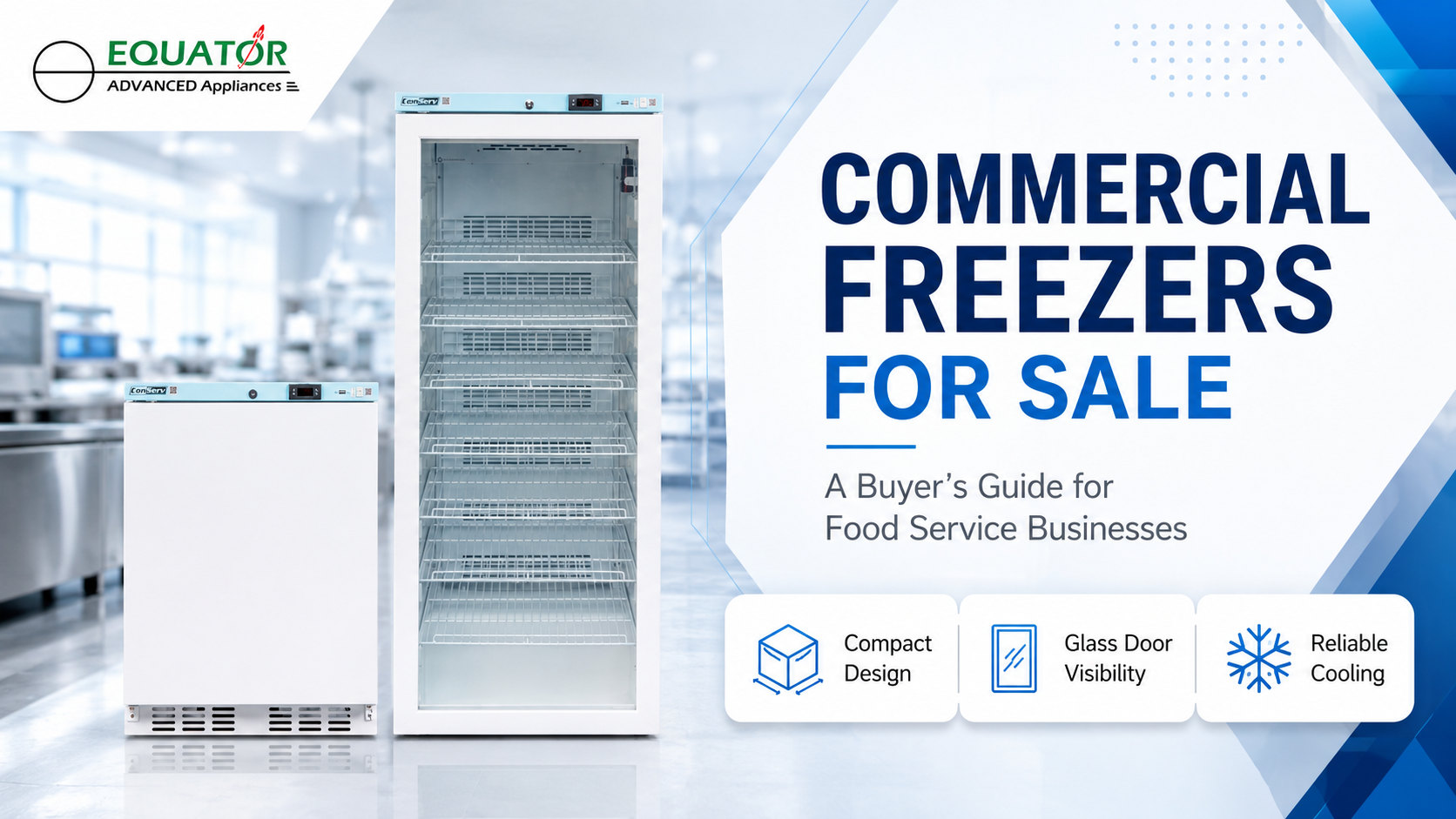
A commercial refrigerator is usually the better first investment when your operation depends on fresh ingredients, drinks, sauces, dairy, prepared foods, or temperature-sensitive packaged products. Restaurants, cafés, coffee shops, juice bars, delis, and convenience stores often need more refrigerator access than freezer access during active service. For compact spaces, an commercial undercounter refrigerator such as the Conserv Compact 24in COMMERCIAL/PHARMACEUTICAL Refrigerator 3.9cf WIFI 110V can be practical for kitchens where floor space is limited.
Key Features to Compare Before Buying a Commercial Fridge or Freezer
When comparing commercial refrigerators for sale, commercial freezers for sale, or a commercial refrigerator freezer combination, start with the daily workload. A small beverage station does not need the same setup as a high-volume restaurant kitchen. Look at how often the door opens, where deliveries arrive, who needs access, and how quickly products rotate.
Capacity is important, but usable layout matters more than a big number on a spec sheet. Adjustable shelves, clear visibility, door swing clearance, temperature display, alarms, and monitoring features can make the difference between smooth operations and constant staff frustration. For businesses in tight urban kitchens, even a few inches can decide whether the unit supports the workflow or becomes a stainless-steel traffic cone.
Temperature Control and Monitoring
Consistent temperature control should be a top priority for any commercial refrigerator or commercial freezer. Food service businesses should check temperature ranges, digital displays, alarms, and monitoring features before buying. WiFi-enabled commercial refrigeration can be especially useful for operators who manage multiple locations or need to monitor storage conditions outside normal business hours.
The Conserv 24in COMMERCIAL/PHARMACEUTICAL Refrigerator 12.7cf WIFI 110V is a useful example of a larger commercial refrigerator option for businesses needing more vertical storage. A model with WiFi monitoring and a temperature alarm can support better oversight for restaurants, cafés, specialty food shops, and facilities storing temperature-sensitive items. This type of feature matters when staff turnover is high or when managers cannot personally check every unit throughout the day.
Glass Door vs Solid Door
A commercial glass door refrigerator is ideal when visibility saves time. Beverage programs, grab-and-go displays, dessert cases, staff kitchens, and convenience-store setups benefit from seeing inventory before opening the door. A glass door commercial refrigerator can reduce unnecessary browsing and help teams quickly identify low-stock items.
Solid door units may be better for back-of-house storage where presentation is not needed and insulation is the main concern. For restaurants in high-traffic areas like Downtown Miami, Midtown Manhattan, or Chicago’s Fulton Market, a visible glass door commercial refrigerator such as the Conserv 24in COMMERCIAL/PHARMACEUTICAL Refrigerator 12.7cf WIFI 110V can make sense for organized refrigerated storage and quick product checks.
Undercounter, Upright, and Compact Layouts
A commercial undercounter fridge works well below prep tables, bar counters, coffee stations, and compact service areas. It is common in cafés, bakeries, food trucks, bars, and small restaurants where staff need refrigerated items within arm’s reach. In dense neighborhoods like Brooklyn’s Williamsburg, Boston’s Back Bay, San Francisco’s Mission District, and Washington, D.C.’s Georgetown, undercounter equipment can help preserve floor space.
Upright units provide more vertical capacity and are better suited for bulk storage, full-service restaurants, ghost kitchens, institutional kitchens, and larger beverage programs. A compact 24-inch commercial refrigerator can fit smaller layouts, while a 12.7 cu. ft. commercial fridge can serve higher inventory needs. The best choice depends on whether the business needs speed, volume, display, or a mix of all three.
How to Choose the Right Commercial Refrigerator for Food Service Workflows
Before buying a commercial refrigerator for sale or commercial freezer for sale, map the path of your inventory. Ingredients usually move from delivery to storage, then to prep, then to service. If the refrigerator is too far from the prep station, staff lose time. If the freezer is difficult to access, frozen inventory gets ignored until the dinner rush turns into a scavenger hunt.
Restaurants in major USA cities often have different workflow pressures. A quick-service restaurant near Times Square may need fast beverage access and reliable backup storage. A bakery in Los Angeles may need chilled fillings and dairy close to production tables. A seafood restaurant in Miami may need stronger cold-chain discipline because warm weather and frequent deliveries can add stress to storage routines.
For Restaurants and Ghost Kitchens
Restaurants and ghost kitchens should prioritize durability, shelf flexibility, and easy access. A commercial refrigerator freezer combination may be useful in some spaces, but separate refrigeration and freezer units often provide better organization for high-volume kitchens. If your menu relies heavily on fresh produce, sauces, dairy, and proteins, prioritize refrigerator capacity before adding extra freezer space.
For Cafés, Coffee Shops, and Juice Bars
Cafés and juice bars often need compact refrigeration for milk, creamers, fruit, cold brew, juices, and grab-and-go items. A commercial beverage fridge or commercial drink refrigerator can support front-of-house sales, while an undercounter unit can keep baristas and prep staff moving efficiently. In cities like Seattle, Austin, Denver, and Portland, where coffee and café culture is strong, compact commercial refrigeration can help small operators compete without overcrowding the counter area.
For Convenience Stores and Beverage Programs
Convenience stores, bars, hotels, gyms, and office cafés often benefit from commercial beverage cooler setups. A commercial drinks fridge with a glass door helps staff and customers see available inventory quickly. For high-traffic spaces near airports, stadiums, tourist districts, and downtown business centers, visibility can improve speed and reduce unnecessary handling.
Local Buying Considerations Across New York, Los Angeles, Chicago, Houston, and Miami
Commercial refrigeration needs vary by city because climate, building age, delivery patterns, and space constraints all influence equipment decisions. New York City businesses may have basement storage, narrow stairwells, freight elevator limits, and tight installation windows. Always check unit dimensions, door swing, ventilation clearance, and delivery access before placing an order.
Los Angeles operators may focus on heat management, outdoor service demand, and long operating hours. Restaurants around Santa Monica, Silver Lake, Hollywood, and Downtown LA should think about ambient temperature, power access, and how often doors will be opened during rush periods. A commercial cooler or commercial beverage refrigerator that performs well in a busy service environment can protect inventory and reduce staff stress.
Chicago businesses often deal with strong seasonal swings. A restaurant near Millennium Park or Wrigley Field may see very different demand during summer tourism, sports events, and winter months. Houston and Miami businesses should pay close attention to humidity, kitchen ventilation, and temperature monitoring because warm climates can make refrigeration reliability even more important.
Measure Before You Buy
Measure the final installation location, the delivery path, and the surrounding clearance. Check doorways, hallway turns, elevators, loading docks, and counter heights. This is especially important for commercial fridge undercounter models and 24-inch refrigerator units that are expected to fit into built-in work zones.
Check Electrical and Ventilation Requirements
Many commercial refrigeration units use standard 110V power, but buyers should always confirm voltage, outlet access, and dedicated circuit needs. Ventilation is equally important because refrigeration equipment needs room to release heat. Crowding a unit into a poorly ventilated corner can reduce performance and shorten equipment life.
Product Options to Consider for Commercial Refrigeration Needs
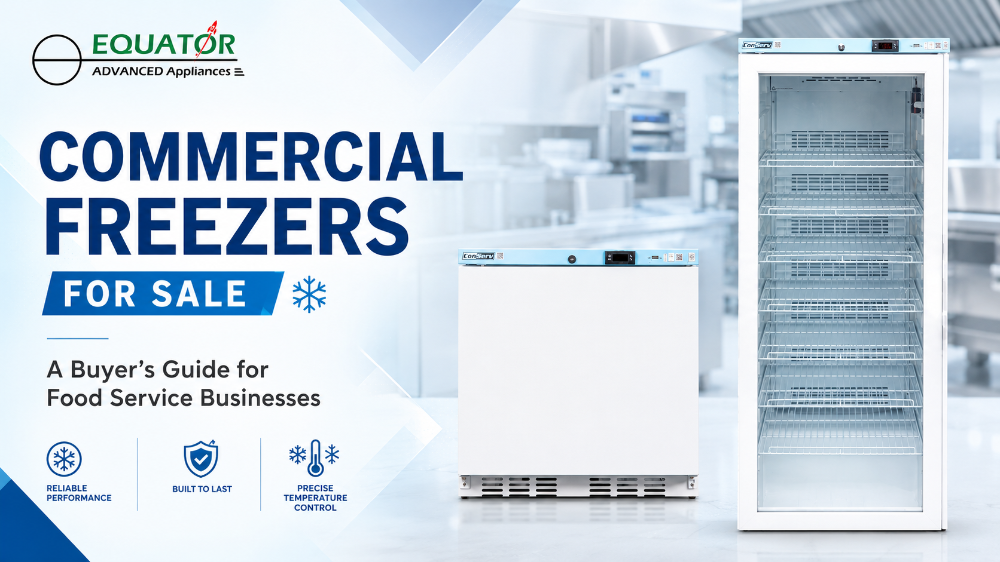
The provided Conserv commercial and pharmaceutical refrigerator models are relevant for businesses looking for monitored cold storage in compact and upright formats. The Conserv Compact 24in COMMERCIAL/PHARMACEUTICAL Refrigerator 3.9cf WIFI 110V is suited for smaller storage zones, undercounter-style planning, offices, cafés, clinics, specialty shops, and kitchens that need controlled refrigeration without taking over the room. It can be useful where operators want compact capacity with connected monitoring.
The Conserv 24in COMMERCIAL/PHARMACEUTICAL Refrigerator 12.7cf WIFI 110V is better suited for larger storage needs while still keeping a manageable 24-inch footprint. For food service businesses, a larger commercial refrigerator can support beverages, ingredients, packaged foods, and prep items that need organized chilled storage. The 12.7 cu. ft. white commercial refrigerator with glass door and temperature alarm is also a practical consideration when visibility and alerts are part of the buying checklist.
These models are refrigerators, not commercial freezers, so buyers should match them to chilled storage needs rather than frozen storage needs. For businesses searching commercial refrigerator and freezer options, the smartest approach is to separate inventory into chilled, frozen, display, and prep-access categories. That simple step prevents overbuying one type of equipment while under-serving the part of the kitchen that actually slows down operations.
Commercial Fridge Buying Checklist for Food Service Businesses
A commercial fridge or freezer purchase should be based on daily operations, not just a sale price. A low upfront cost can become expensive if the unit is too small, too hard to access, or poorly suited to the environment. The goal is to buy equipment that supports service speed, safe storage, inventory control, and long-term reliability.
- Confirm storage purpose: Decide whether you need chilled storage, frozen storage, beverage display, prep access, or backup inventory space.
- Measure the space: Include width, depth, height, door swing, ventilation clearance, and delivery path.
- Review capacity: Choose usable shelf space based on real inventory, not optimistic “we’ll make it fit” math.
- Check monitoring features: Look for temperature displays, alarms, and WiFi monitoring if oversight matters.
- Match the door type: Use glass doors for visibility and solid doors for back-of-house storage.
- Plan for city conditions: Consider heat, humidity, old buildings, limited loading access, and high labor turnover.
- Think about maintenance: Easy cleaning, accessible coils, and clear operating procedures help protect performance.
For restaurants, cafés, and beverage retailers in major cities, it is wise to think beyond the first unit. A growing business may eventually need a commercial beverage refrigerator, commercial stand up freezer, commercial under the counter refrigerator, and prep-line refrigeration. Buying the right first unit helps create a cold-storage system that can grow without turning the kitchen into a game of appliance Tetris.
Frequently Asked Questions
What is the difference between a commercial refrigerator and a commercial freezer?
A commercial refrigerator is designed for chilled storage of perishable food, beverages, dairy, produce, and prepared items. A commercial freezer is designed to keep frozen foods, bulk ingredients, desserts, and ice at freezing temperatures for longer-term storage.
Food service businesses often need both, but not always in equal capacity. A café may need more commercial beverage refrigerator space, while a catering kitchen may need more commercial stand up freezer capacity.
Is a commercial refrigerator for home use a good idea?
A commercial refrigerator for home use can make sense for serious home chefs, large families, home-based food businesses, or beverage collectors. However, buyers should consider size, noise, ventilation, power needs, and whether the unit’s appearance fits the home environment.
A commercial fridge for home is usually more practical in garages, pantry rooms, home bars, outdoor kitchen support areas, or dedicated prep spaces. For regular kitchen use, measure carefully before buying.
What type of commercial undercounter refrigerator is best for small restaurants?
The best commercial undercounter refrigerator for a small restaurant is one that fits below the work surface, allows proper ventilation, and keeps high-use ingredients close to the prep or service line. Compact 24-inch models are often useful in small urban kitchens.
Restaurants in neighborhoods with tight floor plans, such as Manhattan, San Francisco, Boston, and Washington, D.C., should prioritize exact dimensions and door clearance. Even a strong unit becomes frustrating if staff cannot open it comfortably during service.
Should I choose a commercial glass door refrigerator or a solid door unit?
Choose a commercial glass door refrigerator when visibility matters. Beverage programs, grab-and-go food, desserts, and shared staff storage benefit from being able to see inventory before opening the door.
Choose a solid door unit when the refrigerator is used mainly for back-of-house storage and product display is not important. Solid doors can be a practical option for bulk ingredients, prep items, and storage areas where appearance is secondary.
What should food service businesses check before buying commercial freezers for sale?
Before buying commercial freezers for sale, check capacity, temperature range, door type, shelving, defrost style, installation space, electrical requirements, and delivery access. Businesses should also confirm whether they need frozen storage or whether a commercial refrigerator would solve the immediate operational problem.
It is common for buyers to search for a commercial freezer when they really need better refrigerated prep access. Reviewing inventory categories first can prevent a costly mismatch.
Are WiFi commercial refrigerators useful for restaurants and cafés?
WiFi commercial refrigerators can be useful for restaurants, cafés, specialty food shops, and multi-location operators that want better temperature visibility. Remote monitoring and alerts may help managers respond faster when storage conditions change.
This is especially helpful in businesses with overnight storage, frequent staff changes, or temperature-sensitive inventory. It does not replace routine checks, but it adds another layer of oversight.
What size commercial fridge is best for a food service business in a major USA city?
The best size depends on menu volume, delivery frequency, kitchen layout, and available floor space. A compact commercial fridge may work for a café or bar station, while a larger upright commercial refrigerator may be better for restaurants, ghost kitchens, and food prep operations.
In major USA cities, space is often the deciding factor. Measure first, then choose the largest practical unit that supports the workflow without blocking movement, ventilation, or service access.
Conclusion: Buy Cold Storage Around Your Real Workflow
The best commercial freezer or commercial refrigerator purchase starts with the way your business actually operates. A restaurant in Chicago’s West Loop, a café in Los Angeles, a juice bar in Miami, a deli in New York City, and a catering kitchen in Houston may all need cold storage, but they do not need the same layout. Capacity, visibility, temperature monitoring, door type, and footprint should all support the daily rhythm of prep, service, and inventory management.
For businesses comparing commercial refrigerator for sale options, Conserv compact and 24-inch commercial/pharmaceutical refrigerator models offer practical choices for monitored chilled storage. If your operation needs undercounter convenience, glass door visibility, WiFi oversight, or temperature alarm support, review the product specifications carefully and match them to your space before ordering. Smart cold storage keeps food safer, staff faster, and inventory better organized—which is basically the kitchen version of a standing ovation.