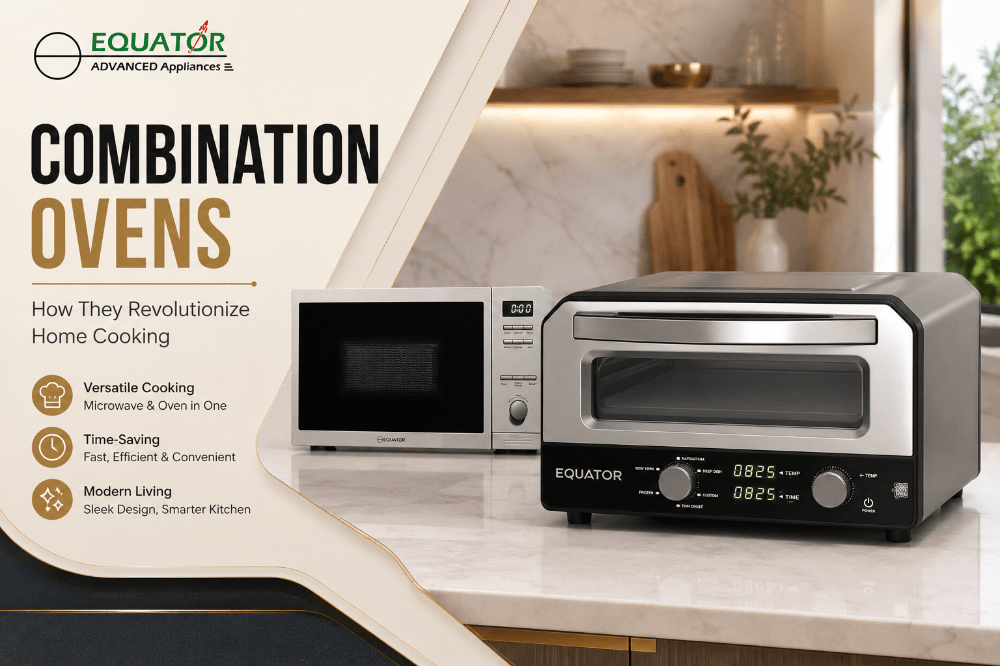
What Makes a Combo Microwave Oven Different?
A standard microwave primarily heats food quickly, while a traditional oven surrounds food with sustained dry heat. A combination oven brings these methods together in one cooking cavity. Depending on the model, users may select microwave cooking, oven cooking, convection-style heating, or a coordinated combination mode designed to improve speed and texture.
Retailers and homeowners use several overlapping names for this category. You may see products described as a combi microwave oven, microwave and oven combo, microwave oven and oven combo, microwave convection oven combo, oven microwave oven combination, or combined microwave and conventional oven. These terms generally refer to an appliance that performs more than basic microwave reheating.
Larger built-in kitchen packages are often called a wall oven microwave combo, combination wall oven and microwave, microwave combination wall oven, wall oven combo with microwave, or wall microwave combo. A countertop combination appliance is usually smaller and more flexible to install. It should also not automatically be confused with a microwave toaster oven combo, which may use different heating elements, capacities, clearances, and cookware requirements.
Microwave Speed Meets Oven-Style Results
The real improvement is not simply having more buttons. It is being able to choose the heating method that best suits the food. Microwave energy is useful for reheating soup, warming leftovers, softening ingredients, and defrosting frozen foods. Oven-style heat is better suited to foods that need a firmer exterior, more even surface heating, or additional browning.
Combination cooking can also simplify meal timing. A casserole may be heated efficiently before oven heat finishes the top, while frozen items can move from defrosting to cooking without being transferred between appliances. Fewer transfers mean fewer dishes, less counter clutter, and a smoother cooking routine on busy evenings.
How Combination Ovens Revolutionize Everyday Home Cooking
They Make Small-Batch Cooking More Practical
Heating a full-size oven for one chicken breast, a small vegetable tray, or a two-person meal can feel excessive. A compact microwave and oven combined appliance provides a more appropriately sized cooking space for smaller portions. This is valuable for couples, students, retirees, remote workers, and families preparing separate meals at different times.
Small-batch cooking also encourages experimentation. Home cooks can test a baked pasta, roast a modest portion of vegetables, or prepare a quick dessert without reorganizing the entire kitchen. The appliance becomes a daily cooking tool rather than something reserved for reheating coffee and yesterday’s takeout.
They Help Families Cook in Stages
Modern households rarely eat on one perfectly synchronized schedule. One person may need dinner before an evening shift, while another returns from school or work later. A combo unit allows meals to be prepared, reheated, and finished with better texture than microwave-only heating typically provides.
It can also support holiday and weekend cooking as a secondary oven. While a main oven handles a large roast, the combination appliance can warm side dishes, bake a smaller item, or reheat food without interrupting the primary cooking schedule. Think of it as a capable kitchen assistant that does not ask where the measuring cups went.
Why Major U.S. City Kitchens Benefit from Combination Ovens
New York City Apartments and Compact Neighborhood Kitchens
In Manhattan neighborhoods such as the Upper West Side, compact galley kitchens often require careful appliance planning. Williamsburg apartments, Brooklyn brownstones, and Long Island City condos may have limited counter depth, narrow cabinet openings, or renovation restrictions. A compact combination oven can reduce the need for separate microwave and countertop baking appliances.
Residents near Central Park or in older prewar buildings should measure the complete installation area rather than relying only on advertised appliance width. Door clearance, trim dimensions, airflow, nearby shelving, and access to the electrical outlet all matter. Renters should also confirm whether cabinetry may be modified before treating a freestanding product as a permanent built-in appliance.
Los Angeles Condos, ADUs, and Warm-Weather Cooking
In Koreatown studios, Silver Lake apartments, and backyard accessory dwelling units, combination ovens can provide meaningful cooking capacity without requiring a full kitchen redesign. They are particularly useful in guest suites, home offices with approved kitchenettes, and compact open-plan interiors where every visible appliance affects the room’s appearance.
Los Angeles households may also appreciate preparing smaller meals without operating a large conventional oven for extended periods. Although every cooking appliance releases some heat, using a right-sized cavity for a modest meal can be more comfortable than heating a full-size oven during warmer weather. Proper ventilation and manufacturer-specified clearances remain essential.
Chicago, Houston, and Miami Home-Appliance Considerations
Chicago apartments in Lincoln Park and the West Loop may combine older electrical layouts with updated kitchens. Before installing an oven microwave combo wall unit or compact built-in model, owners should verify circuit capacity, outlet location, cabinet dimensions, and ventilation. Homes near Lake Michigan may look thoroughly modern while still hiding wiring from an earlier renovation era.
In Houston neighborhoods such as The Heights and Midtown, reducing dependence on a large oven can make everyday summer cooking more manageable. Miami condos in Brickell and homes around Coral Gables may use compact cooking appliances for entertaining, guest areas, or covered outdoor-adjacent kitchens. Near Biscayne Bay, humidity and salt exposure make dry storage, routine cleaning, and protected electrical placement especially important.
Two Equator Cooking Options for Different Home-Cooking Needs
Equator Hybrid Microwave+Oven for Everyday Versatility
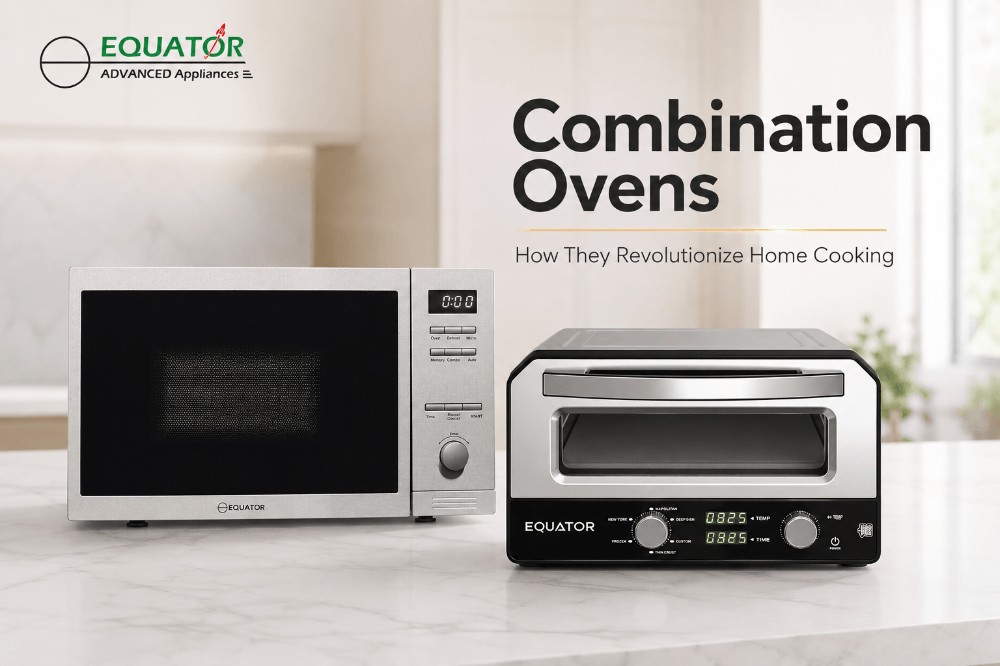
The Equator Hybrid Microwave+Oven 0.8 cu.ft. Free Standing/Built-in Stainless w/Trim is designed for households that want microwave convenience and oven functionality in one compact format. Its freestanding or built-in configuration gives homeowners more installation flexibility, while the included trim supports a cleaner integrated appearance when the cabinetry and clearances are suitable.
This type of hybrid microwave and oven combined appliance is well suited to reheating, defrosting, small meal preparation, side dishes, and secondary-oven duties. The product includes a 0.8-cubic-foot cavity, separate microwave and oven capabilities, digital controls, auto-cook functions, memory settings, weight defrost, a timer, a glass turntable, and a child-lock function. Installation should follow the supplied trim-kit and clearance instructions rather than treating the unit like an ordinary countertop microwave.
Equator Pizza Oven for Specialized High-Heat Cooking
The Equator 0.5 cu.ft. Indoor/Outdoor Pizza Oven serves a different purpose. Instead of being a general microwave oven combo, it concentrates on high-temperature pizza preparation using a stone-baking surface. It accommodates pizzas up to 12 inches and offers six preset modes plus custom settings, making it useful for households that regularly prepare New York-style, thin-crust, deep-dish, frozen, or personalized pizzas.
The countertop pizza combination oven includes a cordierite pizza stone and accessories for preparing and serving pizza. Its adjustable high-temperature operation, dual heating approach, controls, cooling features, and automatic shutoff are intended to produce a crisp base and evenly cooked toppings. When using it in an outdoor-adjacent setting, the appliance must remain protected and operated only as permitted by its manual and electrical requirements.
Choosing Between Countertop and Wall Oven Microwave Combinations
Choose a Countertop or Trim-Kit Model When Flexibility Matters
A countertop or convertible freestanding/built-in model is often the better fit for apartments, condos, RV-style spaces, guest suites, and kitchens that may be remodeled later. It usually requires less construction than a complete wall oven and microwave combo. It can also be easier to replace when appliance technology or household needs change.
Before purchasing, measure width, height, depth, door swing, cord reach, and ventilation space. A unit that physically fits inside an opening may still be unsuitable if air cannot circulate properly. Built-in installation should only be used when the model is specifically designed and documented for that configuration.
Choose a Wall Oven and Microwave Combo for a Permanent Kitchen Plan
A combination wall microwave and oven package may be appropriate for a full kitchen renovation, especially when the goal is a coordinated built-in appliance wall. These installations can provide larger capacities and place both appliances at a convenient height. However, they generally involve more cabinetry work, electrical planning, installation expense, and future replacement considerations.
Homeowners comparing wall oven and microwave combinations should look beyond appearance. Confirm whether the microwave and oven are serviced separately, whether replacement dimensions are standardized, and whether the kitchen has the required electrical supply. A beautiful appliance wall is less charming when opening one door blocks a drawer or the nearest usable outlet lives in another ZIP code.
Practical Cooking and Safety Tips for Combination Ovens
- Match the mode to the cookware. A container labeled microwave-safe may not be suitable for high-temperature oven mode. Use cookware approved for the selected cooking function.
- Do not block ventilation. Maintain the manufacturer’s required space around the appliance, including behind trim kits and built-in installations.
- Use smaller portions strategically. Combination ovens perform especially well when the food size matches the cavity and heating method.
- Rotate or stir when needed. Microwave heating can create hot and cool areas, so follow recipe and appliance instructions for even results.
- Clean spills promptly. Grease, cheese, sauce, and crumbs can affect odor, airflow, smoke production, and overall performance.
- Use the child lock appropriately. A control lock helps prevent unintended operation but does not replace adult supervision around hot food, cookware, doors, or exterior surfaces.
Food safety still applies when cooking is faster. When reheating prepared foods, cover or rotate them as directed, allow the recommended standing time, and use a food thermometer when appropriate. USDA guidance recommends reheating leftovers thoroughly and allowing standing time so heat can continue distributing through the food after microwave operation stops.
Frequently Asked Questions About Combo Microwave Ovens in Major USA Cities
Can a combo microwave oven replace a regular oven?
It can replace a regular oven for many small meals, reheating tasks, baked side dishes, and modest portions. However, cavity size, temperature range, cookware compatibility, and heating design may limit large roasts, multiple baking sheets, or family-size holiday cooking. Many households use a combination oven as a primary appliance in a small home or as a secondary oven in a larger kitchen.
Is a microwave convection oven combo the same as a wall oven microwave combo?
No. A microwave convection oven combo usually describes one cooking cavity that offers microwave and circulated hot-air cooking. A wall oven microwave combo generally refers to two coordinated built-in cavities: a microwave above and a conventional wall oven below. Installation cost, capacity, electrical requirements, and replacement options differ significantly.
What is the best combo microwave oven for a New York City apartment?
The best choice is usually a compact model with documented countertop or built-in installation options, clearly stated ventilation requirements, and dimensions that fit the actual kitchen opening. New York residents should measure cabinet depth, trim width, door clearance, and outlet access, especially in older Manhattan, Brooklyn, and Queens buildings.
Do combination ovens require special electrical wiring?
Some compact models operate from a standard properly grounded household circuit, while larger wall combinations may require dedicated higher-capacity wiring. Always check voltage, amperage, plug type, and circuit requirements before purchase. Older homes in Chicago, New York, Boston, and other established cities may need an electrician to verify the existing circuit.
Can a microwave and toaster oven combo brown food?
Models with exposed heating elements, convection heat, or oven modes can generally brown and crisp food more effectively than a microwave-only appliance. Results depend on the heating system, rack position, temperature, food moisture, and cooking time. The name alone does not guarantee identical performance across every microwave toaster oven combination.
Are combination ovens useful for families or only for small households?
They are useful for both. Small households benefit from compact, right-sized cooking, while families can use them for staggered meals, snacks, side dishes, school-night reheating, and extra holiday capacity. The key is choosing a cavity size and power level that match the portions prepared most often.
Can the Equator pizza oven be used instead of a combo microwave oven?
The pizza oven is better viewed as a specialized companion appliance rather than a direct replacement. It focuses on high-heat stone baking and pizza styles, while the hybrid microwave oven handles broader reheating, defrosting, and everyday cooking tasks. Households that frequently entertain may find the two appliances complementary.
Bring More Flexibility to Everyday Home Cooking
Combination ovens change home cooking by making speed, compactness, and oven-style versatility available in one practical setup. They are particularly valuable in major U.S. cities where limited space, older electrical layouts, hot summers, renovation restrictions, and changing household schedules influence appliance decisions. Before buying, compare cooking modes, capacity, exterior dimensions, ventilation, electrical needs, cookware rules, and installation options.
The right appliance should fit both the kitchen and the way the household actually cooks. Whether that means a hybrid microwave oven for everyday meals, a dedicated stone pizza oven for weekend entertaining, or a permanent microwave and wall oven combination, thoughtful sizing and installation will deliver more value than chasing the longest feature list.